
Out There #06
According to other-worldly revelations (shared in Appendix 2 below)…
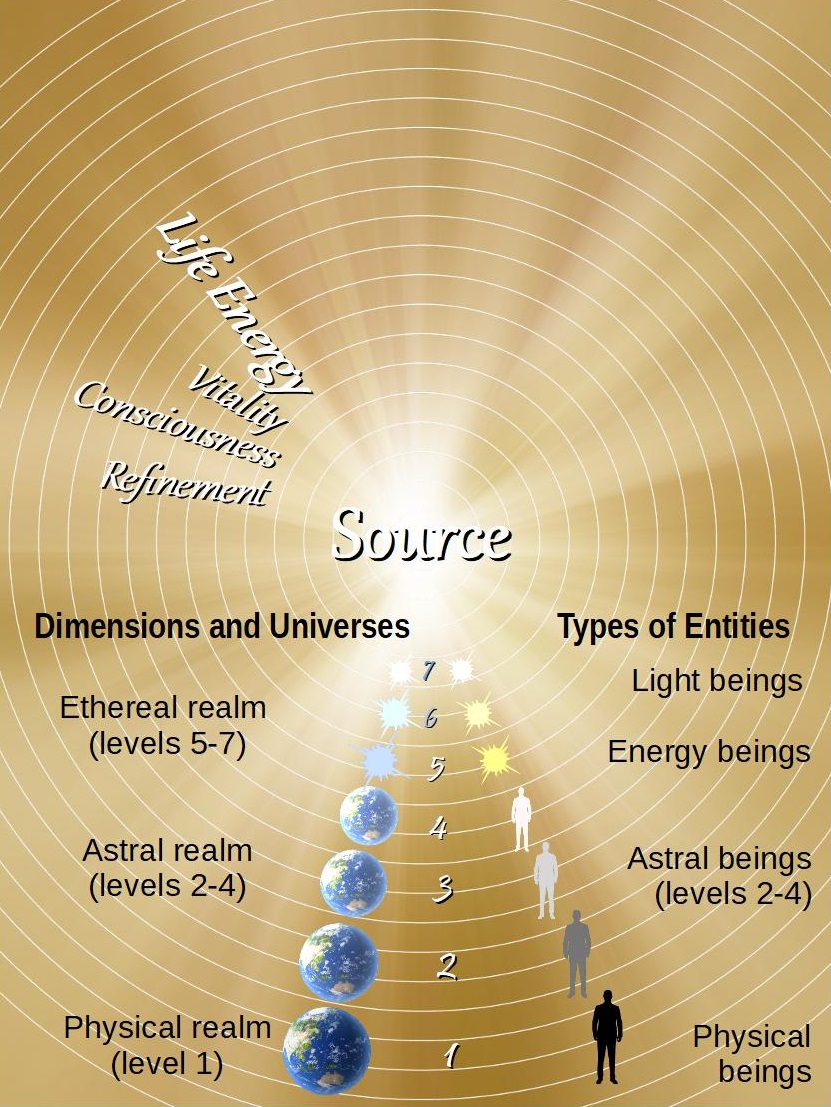
Understanding the cosmic source that we call “God” comes naturally to spirits living in the finest realms (levels 5 through 7). To be alive is to be one with God… very simple, very true.
But here on Earth (level 1) we’ve forgotten about our intimacy with God, so we have to be reminded… especially by our religions.
How did we forget God? Early in life, our five senses took control of our conscious mind and flooded it with impressions of the noisy, flashy material world, and our innate understanding of God got buried deep in our subconscious mind. God is the most powerful force in the cosmos but, for most of us, it’s hidden from view throughout our lifetime. As a result, we grow up with just a vague, mystical sense of that all-encompassing force that’s at the center of everything.
How do religions remind us? All five major religions today acknowledge one God and could be considered “monotheistic,” despite a semantical glitch (that we explore in Appendix 1 after the article).
The different religions call the source:
- God (Christianity)
- Allah (Islam)
- Yahweh or YHWH (Judaism)
- Brahman or AUM (Hinduism)
- Universal Life Force or Nirvana (Buddhism)
We search for meaning in our religions, but religions are human institutions with human embellishments, which we’ll explore in a moment.
Meanwhile, when we dig to the core of all the major religions, we find that our religions agree with the finest spiritual beings in their understanding of God. First, let’s see how finer spirits understand God.
Finer Spirits Understand God Clearly

In their service to the Earth, I think The Seven probably travel extensively among levels 3, 4, and 5 and stay in close touch with finer beings in levels 6 and 7. I’ve been getting that impression (among others) since late last century while digesting their messages, and more recently while feeling their (and others’) presence and influence more strongly in my life.
Our INIT group received mind-boggling messages from refined spirits in the 1990s—communications that streamed into our world through computers, phones, radios, and TVs. After this article there are several of those contacts in Appendix 2. I highlighted the parts that describe God from their elevated point of view. I consider those contacts to be extremely accurate and reliable.
Meanwhile, here are a few excerpts that give us a good sense of how some of the brightest minds in the cosmos understand the source, or God, in terms we can understand:
- the highest principle of life
- the ultimate reality
- the everything
- a limitless entity
- absolute unity
- the absolute, limitless, all-encompassing cosmos.
Religions Understand God Clearly
At the core of every major religion there’s a simple collection of pure, comprehensive qualities of God that are not so different from the ones above.
According to all five major religions, these are the essential qualities of the source (a.k.a. God, Allah, Brahman, Yahweh, Universal Life Force):
- Creative: the ultimate creator of the cosmos and all living things (or, more accurately, the central, creative force that is spread throughout the cosmos.)
- Omnipresent: present everywhere at all times.
- Omnipotent: possessing unlimited power to create and regulate the cosmos.
- Omniscient: aware of everything in the cosmos, past, present, and future.
- Transcendent and immanent: present and active within the cosmos, although beyond human comprehension.
- Ultimate reality: the fundamental truth behind the physical world and everything else.
So, that’s apparently the gist of God’s role in the vast cosmos—to be and to provide the perfect, pure life-energy filled with infinite knowledge and vitality which becomes—which is—the cosmos… the “all-that-is.” Very simple… and at the same time infinitely complex.
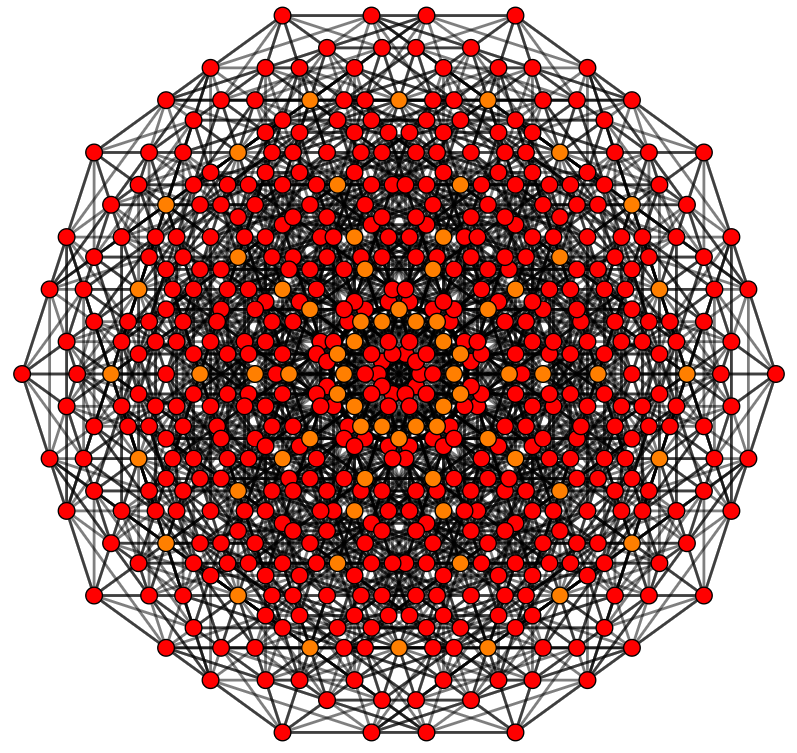
Then, countless brilliant light beings and energy beings at levels 5, 6, and 7 begin to devise that life-energy (adjust its vibration) to shape and monitor the countless, superimposed dimensions, universes, and worlds that make up the cosmos. It’s all done by enormous power of thought. These beings at levels 5 through 7 apparently include the ones that our religions recognize as archangels and super deities.
We humans tend to embellish these light beings and energy beings with human-like shapes and bodies (which we’ll explore in a moment), but they might more accurately be envisioned as coherent clouds of powerful consciousness… or balls of infinitely rich living light… or brilliant, multidimensional runcics. And there are untold trillions of these light beings and energy beings flourishing close to the source.
So, this is apparently the “top-level management structure” of the cosmos:
- A source or God provides (or is) all of the raw material (in the form of pure, nonvibrating life-energy) that creates and sustains the entire cosmos. Then…
- Light beings and energy beings devise and use that rich life-energy (start it vibrating at different densities) to do the planning, organizing, and implementation of the structures and behaviors of all the dimensions, universes, and worlds.
Religions Also Embellish God
We humans like to clean up and dress nicely, wash and brush the family dog, decorate our homes….
It’s human nature to embellish things, including our understanding of God. Religious scholars down through the ages have described God and the finest spirits in ways that people can relate to, even if those embellishments start to veer away from the core. Here are some of the ways we’ve embellished the source to be more like us.
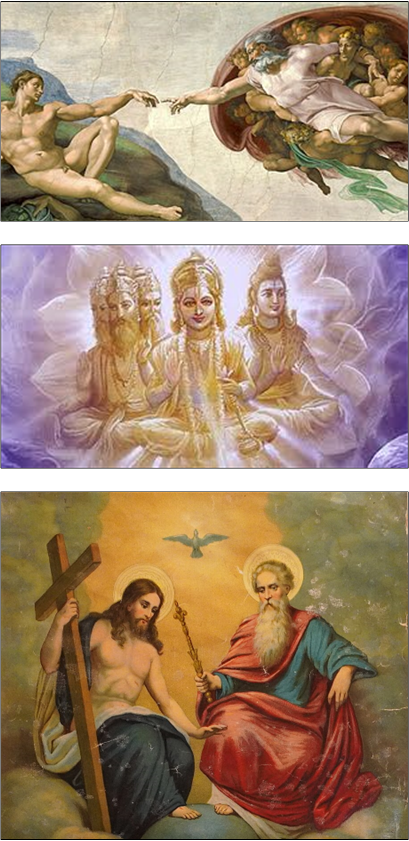
2: Trimurti, Brahman as a lotus containing its three principle energies: Brahma the creator, Vishnu the preserver, and Shiva the destroyer (Hinduism).
3: Trinity… the Father (God), Son (Christ), and Holy Spirit (life-energy represented by a dove)
Three Abrahamic or western religions
- God/Allah/Yahweh revealed himself to Abraham.
- God/Allah/Yahweh is the source of ethical laws like the Ten Commandments and the Five Pillars (rules of right and wrong).
- Humans are made in God’s image.
Christianity
- Just and judgmental: God punishes sin
- Merciful: God offers grace and pardon through faith in Jesus Christ
- Trinity: God is one being made up of three distinct persons: the Father, the Son, and the Holy Spirit… in which “the Father” is God, the creator and sustainer.
- “The Son” is Jesus Christ, who became human and died to take on the punishment for human sins
- “The Holy Spirit” is God’s power and presence in the world (often symbolized as a dove)
- Revelation: God reveals Himself to humans and discloses knowledge and truth
- God reveals Himself through the Bible
- The life of Jesus Christ is considered the greatest revelation of God’s nature
Islam
- Fair, just, and judgmental: Allah judges everyone equally.
- Merciful and forgiving: Allah shows compassion and mercy, and forgives people.
- Eternal: Allah lives forever and will resurrect all humans (restore life after they die).
Judaism
- Yahweh is self-determined and can intervene in human affairs, such as by performing miracles or answering prayers.
- Yahweh is a personal God who is faithful to his promises.
- Yahweh is a covenant-keeping God who desires to display his grace, mercy, and wrath (anger or indignation).
- Yahweh interacts with humans and responds to their behavior.
- Yahweh wants to be known as the God who listens to his people and brings about liberation.
Hinduism
- Hindus stick pretty close to the core understanding of God with their concept of Brahman. Any embellishments are probably assigned to their many deities, not to Brahman itself.
Buddhism
- Buddhists also maintain a pretty clear understanding of the source:
- Universal life force is a single, all-pervading life-energy that animates and controls all living things.
- Nirvana is a transcendent state in which there is no suffering, desire, or sense of self. (That might be interpreted as a conscious oneness with the perfect source and its pure, non-vibrating life-energy, which involves detaching from worldly distractions and imperfections.)
Religions Sometimes Falsify God
In extreme cases, religious leaders and their believers try to use God to justify their anti-God behavior (spreading deception, fear, hatred, conquest, and other dark motivations). A few examples:
- “God-fearing” is an oxymoron. There’s nothing about God to stir fear, but everything to stir awe and wonder.
- God taking sides in human conflicts and contests is also a misnomer. Finer spirit throughout the cosmos is repelled by the dramas that we take for granted here on Earth. If people get spiritual support for their aggressive or brutal behavior, then it probably comes from dark spirits who are stuck in Earth’s shadow… what The Seven have called “the lower levels of heaven.”
- God preferring one religion over another. Again, competition isn’t one of God’s motivations. Two competing employees, two rival football teams, two proselytizing religions, and other earthy dramas like these have nothing to do with the source, which simply continues to spread love, good will, harmony, and other fine and perfect motivations that we humans can choose to accept or reject as we partake in Earth’s dramas.
So, that’s a condensed look at how God on Earth and God in Spirit are really the same, even if through our embellishments of God they become worlds apart.
# # #
Appendix 1: One God (Monotheism)
Religious scholars sometimes say that Buddhists believe in no God and Hindus believe in many Gods. That’s a problem of semantics, as explained below.
Christianity, Islam, and Judaism—the three western (or “Abrahamic”) religions—clearly state that there is one God who is responsible for the entire cosmos.
The two eastern religions are where we find semantical issues:
- Hinduism also acknowledges one God—Brahman—that’s at the center of everything, and Hindus simply go a step further by naming lots of highly refined beings who emerge from that central source: Brahma the creator, Vishnu the preserver and Shiva the destroyer… Ganesha, Rama, Hanuman, Lakshmi, Durga, Kali, Saraswati…. These brilliant beings are akin to the many angels and archangels of the three western (Abrahamic) religions.
- Buddhism looks more at the essence of the source (the universal life force, a sort of vitalizing life-energy), rather than regarding the source as a “being” that emits or controls that life-energy—a semantic difference that finer beings also acknowledge. From their comments below: “God is not a person, but the highest principle of life, as well as the absolute reality. He, or it, is the absolute unity and the absolute, unlimited and all-encompassing Universe. As a limitless entity, the universe can never be one of the creative individuals who are numerous in the cosmos… God, ultimately, is everything, and everything is God… There is only one cosmic truth which can be found through the path of decency.” That message came from Ishkumar, one of The Seven. If Ishkumar incarnated on Earth today, he (or she) would probably choose to be a Buddhist. 😊
So, yes, all genuine religions, even Buddhism, believe in the essential nature of the source.
Appendix 2: ITC Messages from Finer Beings
ITC or instrumental transcommunication is the use of technologies to get in touch with the worlds of spirit. Pure ITC is the way to get the purest, least filtered information into our world from finer realms. That’s how these messages were delivered to us late last century.
Many of you have a false impression about us. Unfortunately, this is often the case with your mediums, who recognize only part of us. Also, there are a great number of people who claim to have a direct connection to God, Yahweh or Jehovah. Some ITC experimenters believe this. It is not correct. Many Earth people mistakenly perceive God as a person or an individual entity. God is not a person, but the highest principle of life, as well as the absolute reality. He, or it, is the absolute unity and the absolute, unlimited and all-encompassing Universe. As a limitless entity, the universe can never be one of the creative individuals who are numerous in the cosmos. Nor is it tenable that there is a single Son of God for the entire cosmos. Jesus Christ, today a part of Pescator, has never described himself as such. Since God, ultimately, is everything, and everything is God, it makes no difference which religion you belong to. There is only one universal truth which can be found through the path of decency. For those who follow eternal principles, the doors to freedom are open. — Ishkumar, one of The Seven (via computer)
The contacts of spirit beings with earth are only a partial aspect of ITC. They should serve as proof that you will live forever and have a higher calling. Ethereal beings in finer realms are not particularly interested in contacts between dimensions, but they support it because they can bring man closer to the realization of eternal life and the principle or being that you call God, Yahweh or Nirvana. — Technician, one of The Seven (via telephone)
We have often given you the real purpose of ITC contacts: Mankind at the End Time should be led back to the principle. Light and darkness shall unite and form a whole again. What people experience now is not the actual beginning of the apocalypse, but only the first symptoms. — Technician, one of The Seven (via computer)
We also got a description of God from Swejen Salter, who, since her death in 1987 has been the project leader of Timestream Spirit Group, who delivered all of these remarkable messages and images to our world late last century. Swejen here is apparently referring to the physical universe(s) at level 1 in the opening diagram:
God, the Principal, the Creator or whatever else you wish to call him is everywhere. He is in the universe and the universe is in Him. However, the Universe and therefore God are two entities. (The states of) being and non-being. Matter and nonmatter. Scientists have often tried to explain what matter is and I believe I can spare myself another explanation. Nonmatter is not to be compared to anti-matter but is really what we describe as soul or spirit. Every living creature, even an amoeba or a bacillus, has a soul….” — Swejen Salter, project leader of Timestream (via telephone)


 Macy Afterlife: The Beacon
After reading the article, Regina suggested stressing the most important point for an individual:
Our individual recognition of God’s Light within us is how we become a part of the oneness, which is the real world..
As the Quakers say, “That of God is in each person.”
Whenever I hear someone use the term “God fearing” I make an attempt to dissuade them from thinking like that. Fearing God is hopelessly disempowering.
The other 2 falsifications religions do about God further examples of how we anthropomorphize Divinity.
“God became as we are so that we may become as God is.” (attributed to various people)
That got me thinking for a couple of days. I guess it’s human nature to anthropomorphize… to sort of assess or judge our pets, other animals, ETs, spirits, even God… (even other people?) by how similar they are to us. There’s part of us that wants them to be more like us, and their differences make us uneasy.
Last week during the cold snap I saw some dogs on leashes dressed up in pet sweaters. I can imagine asking one particularly powerful looking dog in a flamboyant sweater what he thinks about all this, and him replying, “It’s ROUGH! ROUGH, I tell you. ROUGH!
🙂
It’ll be nice when our sciences, our religions, and we humans ourselves all have a better understanding of life throughout the cosmos.
Hey Mark — ‘Finer Spirits Understand God Clearly’ – this just popped up in my feed. Looking forward to reading more. Glad to have the prompt and looking forward to revisiting!